Why this is hard
Reading the request precisely
Examination letters list specific items. Answering something adjacent doesn't close the issue.
Organizing the records
A labelled, indexed set of documents is far easier for an examiner to accept than a stack of receipts.
Explaining without over-explaining
Short, factual explanations tied to documents keep the scope where it started.
Keeping review rights open
Deadlines and response records matter if you later disagree with the result.
What is inside
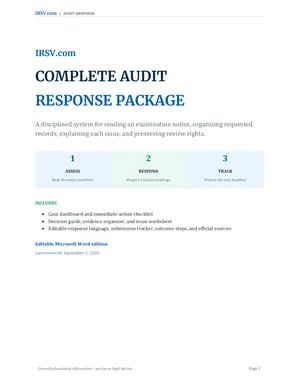
- Build an issue matrix mapping each requested item to your evidence
- Index and label documents so an examiner can follow them
- Draft neutral, issue-by-issue explanations you can edit
- Track deadlines, submissions and the steps that remain if you disagree
Read the free guide first
These pages explain the situation and your options at no cost:
Frequently asked questions
Can I use this for an in-person or office audit?
Yes. The preparation is the same: understand each issue, organize the records, and document what you provided.
Should I still consider representation?
For complex or high-dollar issues, a licensed representative can help. This kit organizes your facts either way.
Is this tax or legal advice?
No. The kit is an educational template. It does not create a client relationship and does not replace a CPA, enrolled agent or tax attorney. For complex cases, consider professional help or a Low Income Taxpayer Clinic.
How do I get the file after I buy?
Checkout is handled by Gumroad, which emails you a download link right after purchase.
Official IRS pages to check
IRSV.com is not affiliated with the IRS. Kits are sold by SA Cyber LLC through Gumroad. See the guarantee and terms.